Inner Child Dialogue: When Something Small Hits Hard
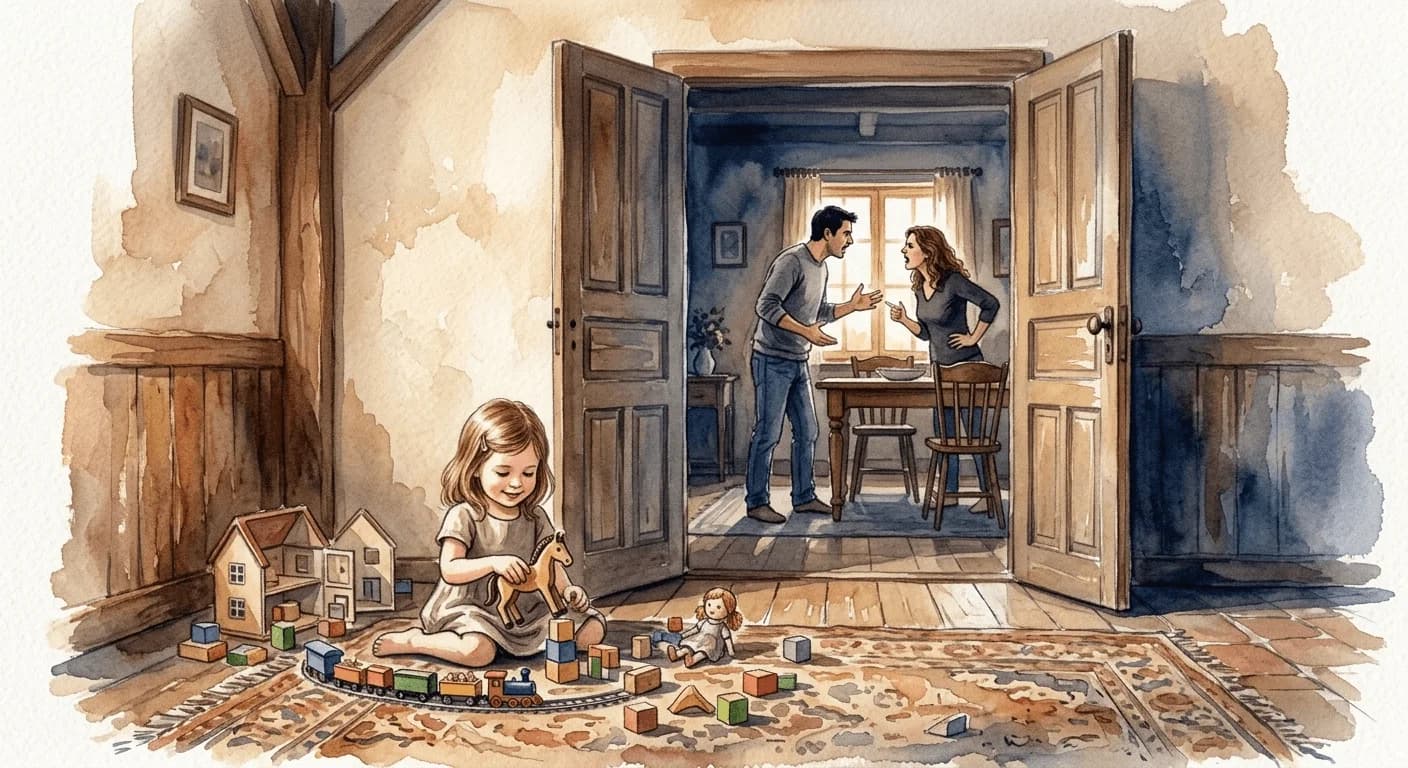
When you feel disproportionately devastated by a small rejection, or freeze like a child under authority, or feel an ancient shame that no accomplishment touches - the grown-up in you knows it is out of proportion. The rest of you does not care. What's happening is that a child-age attachment schema has activated. Bowlby (1969, 1988) established that early caregiving experiences create internal working models - implicit templates of 'am I worthy of care?' and 'will others respond to my needs?' - that persist into adulthood and automatically activate under stress. Inner Child Dialogue (also called Compassionate Reparenting) is a structured technique drawn from three evidence-based frameworks: Internal Family Systems (Schwartz, 1995), Schema Therapy (Young et al., 2003), and Compassion-Focused Therapy (Gilbert, 2009). It doesn't ask you to process traumatic memories. It asks the adult you became to show up for the younger you that is still responding - and to offer what secure attachment provides: attunement, validation, presence, and the message that you are not alone in this anymore.
Speaking to yourself kindly and criticising yourself run on different machinery - they are not two settings of one dial (Longe et al., 2010)
Schema therapy, the clinical form of this work, outperformed usual care in a multi-centre trial (Bamelis et al., 2014)
What Is This Technique?
Inner Child Dialogue is a present-focused self-compassion practice in which your adult self provides nurturing, validating communication to a visualization of your younger self. It was developed by Lucia Capacchione in the 1970s and has since been integrated into three evidence-based clinical frameworks. In Internal Family Systems (Schwartz, 1995), child parts called 'exiles' carry emotional burdens that the Self - a compassionate adult awareness - can unburden through compassionate witnessing. In Schema Therapy (Young et al., 2003), 'Limited Reparenting' involves providing what caregivers failed to provide, eventually through the Healthy Adult mode within the person themselves. In compassion-focused therapy (Gilbert, 2009) there is a third gear alongside threat and drive: the one that settles you. It is the gear that warmth reaches, which is why the words and the picture matter more here than the analysis. This self-guided adaptation is explicitly NOT traditional inner child therapy: it doesn't explore traumatic memories, doesn't involve regression, keeps the adult firmly grounded in the present, and uses your current emotion as the starting point - not historical events.
How Does It Work?
The mechanism operates through three simultaneous pathways. First: making implicit internal working models explicit. The abstract 'I feel defective' becomes 'a small version of me believes they're defective because they were told so' - externalization reduces fusion with the schema. Second: creating a corrective attachment experience. The adult self responds to the child visualization with what secure attachment provides - attunement, validation, protection, reassurance. What was missing then gets offered now, from the inside, by the person best placed to know exactly what was missing. Third: it turns on the urge to look after someone. Seeing a child having a hard time pulls at you to step in, and when the child is you, that pull has nowhere to go but back. Gilbert (2009) calls the gear it lands in the one that settles you, and the two acts are genuinely different: speaking to yourself kindly and tearing yourself down run on different machinery (Longe et al., 2010). The body notices too - the stress reaction runs smaller in people who meet their own failure kindly (Breines et al., 2014).
Sources: Gilbert (2009) - introducing compassion-focused therapy and its soothing system. doi:10.1192/apt.bp.107.005264, Longe et al. (2010) - what the brain does differently under self-criticism and self-reassurance. doi:10.1016/j.neuroimage.2009.09.019, Main, Kaplan & Cassidy (1985) - how early caregiving becomes a lasting inner template. doi:10.2307/3333827, Schwartz, R. C. (1995). Internal Family Systems Therapy. Guilford Press. (book), Young, J. E., Klosko, J. S., & Weishaar, M. E. (2003). Schema Therapy: A Practitioner's Guide. Guilford Press. (book), Bowlby, J. (1988). A Secure Base. Basic Books. (book)
Step-by-Step Guide
- 1
Ground in Your Adult Self
Before connecting with any younger part of you, firmly establish your adult self in the present moment. Feel your feet on the floor. Notice three things you can see in your current environment. Take three slow breaths: inhale for 4 counts, exhale for 6 counts. Then say to yourself, aloud or internally: 'I am [your name]. I am [your age] years old. I am here in [location]. I am safe right now.' This grounding is not optional - it's the foundation that keeps this practice self-guided and safe. The adult self must remain anchored in the present to provide a secure base for the visualization. If you skip this step and the emotional content intensifies, you have no stable position to return to. Return to this step any time the practice feels overwhelming.
- 2
Connect with the Current Emotion
Identify what you're feeling right now with as much precision as you can - the 130-emotion wheel is useful here, because 'worthless' and 'abandoned' and 'ashamed' are different emotions with different child-age origins. Where do you feel this emotion in your body? What is the quality of the sensation - heavy, tight, hot, cold, empty, hollow? Without analyzing or changing it, simply notice: 'I am feeling [emotion] and it feels like [sensation] in my [body location].' Now ask yourself one question: how old does this feeling feel? Many adult emotions have a child-age quality - they feel younger than your current age. A 35-year-old feeling rejected at work might notice the feeling has a '7-year-old' quality. This is the attachment schema activating. Whatever age comes to mind is the right one.
- 3
Visualize Your Younger Self
Close your eyes or soften your gaze. Imagine a younger version of yourself at the age that came to mind - or any age that feels right. Where are they? What are they wearing? What is their posture - shoulders hunched, arms crossed, curled up, looking away? What is their expression? How do they seem to be feeling? You don't need to remember a specific event. Simply hold the image of this younger you who is experiencing something like what you're feeling now. If no clear image comes, that's fine - you can simply sense or feel the presence of a younger part of you. Some people see a vivid child; others just sense a 'young' quality. Both are valid. If you have a childhood photo, you may look at it - but it's not required.
- 4
Approach with Compassion
As your adult self, approach this child. Come to their level - kneel down, sit beside them. Make eye contact with warmth. Notice: what does this child need to hear? What did they never hear? Speak to them with the warmth you would offer any frightened child - because they are a frightened child, and they are a part of you. Some core messages to offer: 'I see you. I'm here.' 'It makes sense that you feel this way.' 'You didn't do anything wrong.' 'You are not too much. You are not too little.' 'I'm the grown-up you became. I came back for you.' 'You don't have to carry this alone anymore.' 'I'm not going anywhere.' Choose what fits the emotion your younger self is holding. There's no wrong choice. Let the words come from whatever genuine warmth you can find.
- 5
Ask What They Need and Offer It
Ask the child, internally: 'What do you need right now?' Listen for the answer - it may come as words, images, or physical sensations. Common needs: to be held, to be told they're safe, to be told they're loved, to be told they're enough, to be protected, to be allowed to cry, to be allowed to be angry, to be allowed to simply exist. Whatever the need, offer it: if they need safety, say 'I will protect you. No one can hurt you while I'm here.' If they need to be seen, say 'I see all of you. Even the parts you hide.' If they need to be enough, say 'You don't have to earn love. You don't have to be perfect.' If they need physical comfort, visualize holding them, or place your hand on your heart as a physical anchor. Stay with this for two to three minutes. Let whatever emotions arise move through you. Tears are welcome - they're evidence the connection is real.
- 6
Close and Return to the Present
When it feels complete - and you'll feel a shift, a slight softening or release - close the practice intentionally. Thank your inner child for showing up. Remind them: 'I'll come back. You can find me anytime.' Visualize giving them a hug, or placing them somewhere safe. Then slowly bring your attention back to the room. Feel your feet on the floor. Open your eyes. Take three breaths. Notice how you feel now compared to when you started - lighter, tender, sad, relieved, all of these are valid responses. Optionally: write one sentence in your emotion journal about what your inner child needed, and one sentence about what you offered. The closing step is not optional - leaving the visualization 'open' without returning fully to the present is the one thing that can make this practice destabilizing rather than regulating.
When Should You Use This?
This technique is optimal at intensity 3-7. Below 3, it can be used for practice, pattern exploration, and preventive care. At 4-7, this is the optimal range - you can access emotional content while maintaining adult perspective. Above 8, ground yourself first: the steady part of you has to be in the room to hold the picture, and that high up it is not. Use it when: you feel something that seems disproportionate to the current situation; shame or worthlessness feels like a state rather than a reaction to an event; you notice you're reacting from a younger emotional place; or your feelings check-in identifies loneliness, worthlessness, or abandonment. Contraindicated for acute crisis, active PTSD flashbacks, dissociative disorders, or active suicidality - these require professional support, not self-guided visualization.
- Who this is for
- Adults who react to today with an intensity that belongs to something older - a short email, an unanswered message, a raised voice - and who already know it is out of proportion but cannot talk themselves down. If you have read the lists of signs and recognised yourself in most of them, this is the part that comes after the list.
- When it fits in your week
- After a knock that lands harder than it should: a piece of criticism, being left out, someone using a tone you know from childhood. Also in the quiet stretch afterwards, when you are trying to work out what just happened.
- Why one pass is not enough
- The part of you that reacts learned to do it in company, so it settles in company. Doing it alone works because you are both people in the room - but on the hard ones, someone steady beside you is not a luxury, it is the point.
If nothing comes when you close your eyes
- 1Stop trying to see. Ask instead where in your body this sits, and talk to that.
- 2Put an actual childhood photo in front of you and speak to the person in it. No imagination required.
- 3Skip the picture entirely and write: 'What I wish someone had said to me then is...'
- 4Say the age out loud - 'this feels about seven' - and speak to that age, not to a face.
- 5Put a warm hand on your chest and say the sentence anyway. The words work without the visual.
- 6If your mind goes blank and stays blank, that blankness is old protection doing its job. Say thank you and stop for today.
Is this real, or is it just woo?
The most honest page on this subject is the one that says where the line actually is.
There is a literal child living inside you.
There is not, and nobody serious claims there is. It is a way of talking about something plain: what you worked out as a small person about being cared for still colours what you feel now, and it comes back fastest under pressure (Main, Kaplan & Cassidy, 1985).
Inner child work is a recognised diagnosis or treatment.
It is neither. You will not find the term in a clinical manual. What IS tested are the therapies it borrows from - schema therapy beat usual care in a multi-centre trial (Bamelis et al., 2014), and IFS has early results after repeated childhood harm (Hodgdon et al., 2022).
Being kind to yourself is just going soft on yourself.
Speaking to yourself kindly and tearing yourself down are not two settings of one dial - they run on different machinery (Longe et al., 2010). One of them also leaves your body's stress reaction smaller (Breines et al., 2014).
If you cannot picture a child, it is not working.
Plenty of people never see a picture. A sense of a young presence, a tight throat, a photograph on the table - any of those is enough to speak to.
Feeling worse afterwards: normal, and not normal
A wobble after this is ordinary. These are the signs that it has gone past a wobble.
- You cannot get back to the present afterwards - the day stays foggy for hours or into the next day.
- Memories arrive with pictures, sounds or smells you did not choose and cannot stop.
- You lose time, or find yourself somewhere without remembering getting there.
- The sadness does not lift over days and starts taking your sleep and your appetite with it.
- You find yourself drinking, cutting, starving or driving fast to make the feeling stop.
- The younger part turns hostile rather than sad, and you end up frightened of your own reaction.
If you are thinking about ending your life, this is not the page for tonight. Contact your local emergency number or a crisis line and talk to a person now.
Inner Child Dialogue is a starting point - your coach picks what actually fits
Reading about Inner Child Dialogue is one thing; doing it when you're overwhelmed is another. EmoFlow-AI starts with a feelings wheel to name what you're actually feeling among 130 emotions. Then a private AI coach - not you guessing or searching the web - chooses the practice that actually fits your check-in and your history, and walks you through it step by step, in the moment. It remembers what worked and builds a picture of your patterns over time. Not a chatbot that forgets you.
- Names what you feel among 130 emotions, then the coach picks the practice that fits - no guessing, no "which technique should I use"
- Walks you through it step by step, in the moment - not a static how-to
- Learns from your check-ins and history, remembers what worked, and shows your patterns
Free check-in, no account or card. Coaching is free to try for 3 sessions - nothing can auto-charge.
Start free check-inFor Mental Health Professionals
Inner child work in clinical settings is often constrained to session time, with limited visibility into how the client's emotional landscape shifts between sessions or what triggers the child-age activation between appointments. EmoFlow-AI's between-session emotion journal provides a timestamped record of when worthlessness, shame, abandonment, and loneliness clusters activate, with what intensity, and in what context - giving therapists the week's activation pattern rather than the session-presenting state. This is especially useful for schema therapy and IFS practitioners tracking Vulnerable Child Mode or exile activation frequency and intensity over treatment. The before-and-after feelings check-in structure shows whether in-session inner child work is transferring to self-soothing capacity between sessions - a key indicator of earned secure attachment development. For clients who are skeptical of the 'inner child' framing, EmoFlow-AI's emotion wheel framing ('what emotion am I carrying?') provides a less loaded entry point to the same developmental material.
- Timestamped activation patterns show when Vulnerable Child Mode activates between sessions - frequency and intensity data for schema and IFS work
- Before-and-after structure shows whether in-session reparenting work is building between-session self-soothing capacity
- Emotion wheel framing provides a less loaded entry to developmental material for clients resistant to 'inner child' language
Frequently Asked Questions
The six-step protocol above is specifically designed for self-guided use - it differs from traditional inner child therapy precisely in what it doesn't do: it doesn't ask you to explore traumatic memories, doesn't involve regression, and keeps your adult self grounded and in charge throughout. The critical differences that make it safe for independent practice: you always start with grounding (Step 1), you work from your current emotion not historical events, and you always close the practice intentionally (Step 6). If you find that the practice consistently brings up overwhelming material that doesn't calm with the grounding step, that's a sign you'd benefit from doing this work alongside a trauma-informed therapist rather than independently. If what you are carrying is the ordinary kind of childhood hurt, doing this on your own is enough - and short and regular goes further than one long heavy sitting.
Because part of you is. When you were small you worked out two answers - whether you are worth looking after, and whether anyone comes when you need them. Those answers stopped being thoughts a long time ago and became the way you read a room, and they come back fastest when you are under pressure (Main, Kaplan & Cassidy, 1985). So a colleague says something short about your work and what arrives is an old shame that has nothing to do with that colleague. The grown-up in you can see the reaction is bigger than the moment. The faster, older part is not listening - it is following an instruction written when you were seven, and nobody has been back to change it. This isn't pathology, it's a feature of how human emotional memory works. Inner Child Dialogue works by providing the corrective experience that updates the script: instead of the child's distress being left unwitnessed (as it was originally), the adult self shows up for it.
Two reasons. First: making contact with the child visualization touches grief that's been accumulated and avoided. The moment you acknowledge 'there's a small version of me who was never told they were enough,' the grief of that unmet need becomes conscious. That grief is real and appropriate, but it can feel like the practice 'made it worse' when it actually surfaced something that was already there. Second: the soothing system (Gilbert, 2009) - the neurological system for receiving care and feeling safe - is often underdeveloped in people who need this work most, because it develops through consistent attuned caregiving. Activating it for the first time can be disorienting, even painful. CFT research consistently shows that people with difficult childhoods initially find self-compassion exercises aversive before finding them regulating - the discomfort is the system learning to receive what it was never reliably given. This normalizes with practice, usually within a few sessions.
Several reliable indicators: your emotional reactions frequently feel disproportionate to current events; shame or worthlessness feel like stable states rather than temporary responses; you feel 'small,' 'helpless,' or younger than you are in certain situations; you have a persistent inner critic whose voice sounds like a specific person from your past; intimacy or authority figures consistently activate fear or shutdown; you feel fundamentally unlovable or defective despite external evidence to the contrary; or you have difficulty being kind to yourself in ways you'd easily be kind to others. It is worth getting the word exact. 'Abandoned' and 'lonely' and 'worthless' and 'ashamed' feel similar from the inside and point at different things, and the one that keeps coming back is usually the one to follow.
Fair question, and the honest answer has two halves. There is no small person living inside you, and 'inner child' is not a diagnosis - you will not find it in any clinical manual. It is a way of talking about something that is real: what you learned about being cared for when you were little still shapes what you feel now, and it comes back fastest under pressure (Main, Kaplan & Cassidy, 1985). The other half is that the therapies this borrows from have been tested properly. Schema therapy, which works with exactly these young modes, beat usual care in a multi-centre trial (Bamelis et al., 2014) and held up against another serious therapy for borderline personality disorder (Giesen-Bloo et al., 2006). IFS, which calls the young part an exile, has early results for post-traumatic stress after repeated childhood harm (Hodgdon et al., 2022). And speaking to yourself kindly is not the same act as tearing yourself down - they run on different machinery (Longe et al., 2010). What has NOT been tested on its own is the 'inner child' wrapper as separate from the therapies underneath it. So: a useful picture, resting on tested work. Not magic, and not nonsense.
Helpful For These Emotions
Related Techniques
Ready to practice this technique?
Start a Check-in