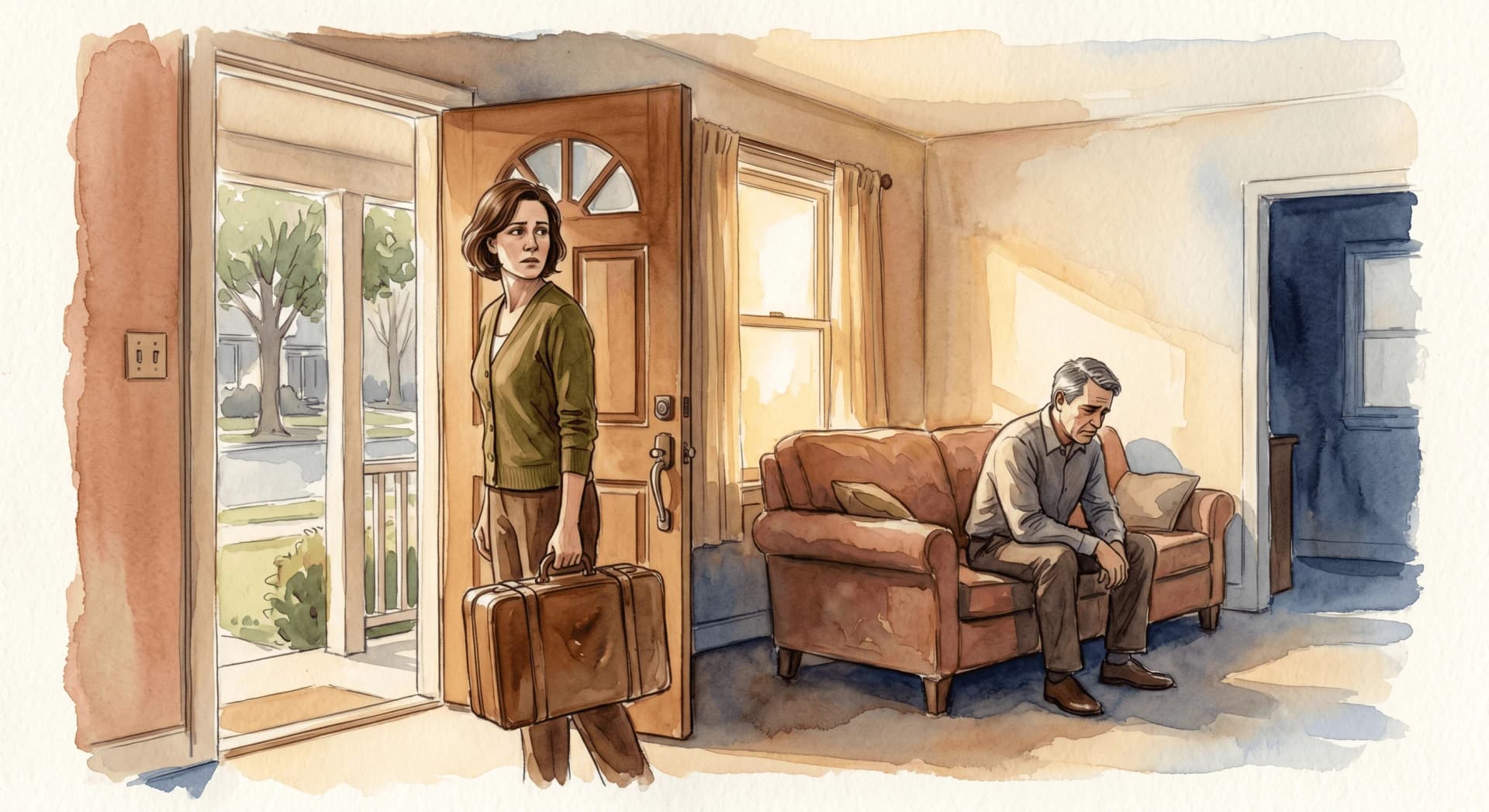
Trauma Bond Recognition: Why You Can't Leave
If you can't leave a relationship you know is harming you, you are not weak, naive, or stupid. You are neurochemically hooked - and there's a documented scientific explanation for why. Patrick Carnes, PhD, defined trauma bonding in 'The Betrayal Bond' (1997) as 'the misuse of fear, excitement, and physiology to entangle another person.' Dutton and Painter (1993) established the mechanism in Violence and Victims: intermittent abuse - not constant - creates the strongest attachment. B.F. Skinner's operant conditioning research showed decades earlier that unpredictable rewards produce addiction-like craving far more powerful than consistent ones. This is why the making-up phase after an abusive incident floods your brain with dopamine and oxytocin, producing relief that feels better than anything in a stable relationship. Recognizing a trauma bond doesn't require you to leave today. But it does replace 'why am I so weak?' with an accurate answer.
Intermittent (not constant) abuse combined with power imbalance creates the strongest traumatic bonds - more powerful than consistent mistreatment (Dutton & Painter, 1993)
Unpredictable reward schedules produce addiction-like craving significantly more resistant to extinction than predictable reward schedules (Skinner, 1957) - the foundational mechanism of trauma bonds
What Is This Technique?
A trauma bond is a powerful emotional attachment that forms between a victim and an abuser through cycles of harm followed by intermittent kindness. The neurobiological mechanism is identical to gambling addiction: unpredictable rewards trigger stronger dopamine release than predictable ones, creating craving that is resistant to extinction. Walker (1979) documented the cycle of abuse in five phases: tension building, incident, reconciliation ('honeymoon phase'), calm, and cycle repeat. The reconciliation phase - apologies, affection, promises to change - produces a massive dopamine and oxytocin release whose intensity is amplified by contrast with the preceding fear and pain. Dutton and Painter (1993) identified two necessary conditions for traumatic bonding: power imbalance and intermittent (not constant) abuse. The pattern occurs in romantic relationships, family systems, friendships, and workplaces - anywhere a power differential combines with unpredictable reward and punishment.
How Does It Work?
Trauma bonds operate through four neurochemical pathways simultaneously. Dopamine is released during reconciliation - the relief of 'getting them back' after an incident is physiologically rewarding, the same pathway activated by a gambling win. Oxytocin is released during physical intimacy and making up, creating chemical bonding regardless of the context. Cortisol is chronically elevated from the ongoing stress of living with unpredictability, impairing decision-making capacity and making clear-eyed evaluation of the relationship nearly impossible. Adrenaline from the fear-tension cycle creates physiological arousal that the brain can mistake for passion and intensity. When the abuse is intermittent rather than constant, Dutton and Painter (1993) found the bond is stronger - not weaker - because inconsistency is what activates the craving mechanism. Leaving triggers literal withdrawal: anxiety, obsessive thinking, depression, insomnia, and desperate urges to return. These are withdrawal symptoms, not love.
Carnes, P. (1997). The Betrayal Bond: Breaking Free of Exploitive Relationships. Health Communications. (book)
Walker, L. E. (1979). The Battered Woman. Harper & Row. (book)
van der Kolk, B. (2014). The Body Keeps the Score: Brain, Mind, and Body in the Healing of Trauma. Viking. doi:10.7812/tpp/14-211. doi:10.7748/ns.29.14.32.s37Sources: Violence and Victims, 8(2), 1993 - Dutton & Painter. doi:10.1891/0886-6708.8.2.105, The Betrayal Bond - Carnes, 1997. doi:10.1080/00107530.1997.10746971, The Body Keeps the Score - van der Kolk, 2014 (book)
How it differs from similar techniques
| How it feels | Extremes: unbearable, then better than anything. | Mostly steady, with ordinary bad days. |
| What the good times do | They arrive after a rupture, and the relief is the reward. | They are not payment for anything. |
| When you are apart | Physical craving, checking, bargaining with yourself. | You miss him, and you can still sleep and eat. |
| What your friends hear | Mostly the good weeks; you edit as you speak. | You describe the same relationship they see. |
| What leaving feels like | Like withdrawal - worse before it is better. | Like grief - sad, and it moves. |
Step-by-Step Guide
- 1
Map the Cycle
Describe the repeating pattern in the relationship. Does it follow a sequence you can recognize? Tension builds - criticism increases, walking on eggshells, coldness or withdrawal. Then an incident - acute harm, verbal, emotional, or physical. Then reconciliation - apologies, affection, gifts, promises that this time is different. Then a calm period where things feel almost normal. Then tension starts building again. Write down how long each phase typically lasts. Not every relationship has all five phases, and the timing varies. But the core loop - harm followed by kindness followed by harm - is the signature. Seeing it laid out as a cycle rather than 'random bad times' is the first shift in understanding.
- 2
Examine Your Response to Reconciliation
When they're kind after being cruel - what do you feel? Write it down specifically: relief, euphoria, hope, gratitude, love, a sense that 'this is who they really are'? Do you find yourself minimizing or forgetting what just happened? Do you feel a desperate urge to make the good feeling last? The intensity of reconciliation relief is a diagnostic marker: in trauma bonds, the making-up phase produces euphoria disproportionate to what happens in stable relationships. This is dopamine responding to contrast - the greater the preceding pain, the more intense the relief. If the making up is the best feeling in the relationship, that's a sign the bond is built on the cycle, not on consistent connection.
- 3
Name the Craving
When they withdraw affection, become cold, or threaten to leave - what happens inside you? Does their approval feel essential to your wellbeing in a way that feels out of proportion? Does their coldness feel literally unbearable - not just unpleasant but physically distressing? Do you find yourself working to get the 'good version' of them back, changing your behavior, walking on eggshells? This experience - the desperate craving for their return to warmth - is the trauma bond working. It operates identically to addiction withdrawal. Their approval has become the source of your neurochemical regulation. The craving isn't love; it's intermittent reinforcement creating dependency.
- 4
Compare Good Moments to Bad Moments
Write down the positive moments you hold onto - the reasons you stay or keep returning. Be specific: what were those good times? How often did they occur? Now write how many harmful incidents happened in the same time period. Compare the lists. What does the ratio look like? Two things often emerge from this exercise: first, the 'good moments' are fewer and further between than memory suggests. Second, some of what feels like 'good' is actually just absence of bad - relief from fear, not genuine positive experience. Dutton and Painter's research found that intermittent kindness, even sparse, produces stronger attachment than consistent treatment. Look at the ratio, not just the highlight reel.
- 5
Apply the Friend Test
Think of a friend you care about - someone whose wellbeing matters to you. Imagine they described this exact relationship to you: the same cycle, the same incidents, the same intensity of making up, the same inability to leave. What would you tell them? What would you want for them? What would you feel about the person treating them this way? Now try to apply that same perspective to yourself. The trauma bond often produces a profound double standard: we can see clearly what a friend deserves that we cannot see for ourselves. If you would want your friend out, notice what happens when you try to extend that same care toward yourself.
- 6
Name What's Happening
The attachment you feel may be a trauma bond - a neurochemical response to unpredictable rewards, not evidence of love or compatibility. Your feelings are real. The attachment is real. But feelings are not proof that a relationship is healthy or worth staying in. Naming 'this is a trauma bond' does not require you to leave today, or ever, on any particular timeline. It replaces 'I must be weak' or 'I must love them too much' with an accurate neurobiological explanation. Name what you feel right now - confused, ashamed, hopeful, grieving, or some mix - and write it down, so that later you can see how it shifts as the picture gets clearer.
When Should You Use This?
Trauma bond recognition is psychoeducation - it works best when you have some cognitive distance from the most recent incident, ideally at intensity 3-7. Use it when: you keep returning to a relationship you've tried to leave; you find yourself justifying behavior to others that you know is harmful; the 'making up' phase produces relief that feels disproportionately intense; or you feel the relationship is 'different from other toxic situations' even when the pattern is the same. Not appropriate during acute crisis (7+), immediately after a threatening incident, or in any situation where safety is at risk. If you are in physical danger, please contact a crisis resource first. Safety planning takes priority over pattern recognition.
- Who this is for
- For you if you know how it looks from outside and you still cannot go. For the part of you that keeps a mental list of his good days. You do not have to be planning to leave to read this, and nothing here will tell you to. It is for understanding why the pull is this strong.
- When it fits in your week
- The night after the making-up, when everything is warm and you cannot trust the warmth. The Sunday you have packed a bag in your head for the fourth time. The week after leaving, when you miss him more than you did while it was happening. The moment a friend says just leave and you have no words for why that is not a plan.
- Why one pass is not enough
- You can see the cycle in a book and still not see it in your own month, because from inside it is not a cycle, it is Tuesday. What shows the shape is a record kept over weeks - and a person who knew you before this, who can tell you what you used to be like without needing you to prove anything.
What people get wrong about it
If I still love him, it cannot be a trauma bond.
The bond and the love are not rivals; the bond is built out of real feeling. Dutton and Painter (1993) found the strongest attachments where mistreatment was intermittent rather than constant and where the power was uneven - not where feeling was absent. Loving him tells you nothing about whether the pattern is here.
Going back means I did not really mean it.
Leaving and returning several times before a final exit is a documented feature of these relationships, not a personal failure (Dutton & Painter, 1993). Each return is information about how strong the pull is, not about how serious you were.
Understanding this means I have to leave now.
Nothing here is a verdict on the relationship and nothing here has a deadline. Naming the mechanism reduces the self-blame that eats the energy you would need for any decision at all. What you do afterwards stays yours, including nothing yet.
When this needs a person, not a page
Understanding a bond is not safety, and this is not a diagnosis of him or of you. Some of this needs someone who sees the whole picture.
- You have been hurt physically, threatened, or made afraid for your children or your animals.
- Your phone, money, documents, or car are controlled by someone else.
- You are having thoughts of not wanting to be here, or you cannot eat or sleep.
- You are planning to leave - the weeks around leaving are the most dangerous, and that planning deserves a professional, not a page.
If you are in danger right now, call your local emergency number. In the US you can call or text 988, or reach the National Domestic Violence Hotline at 1-800-799-7233. This page is for reflection; it is not an emergency service.
Trauma Bond is a starting point - your coach picks what actually fits
Reading about Trauma Bond is one thing; doing it when you're overwhelmed is another. EmoFlow-AI starts with a feelings wheel to name what you're actually feeling among 130 emotions. Then a private AI coach - not you guessing or searching the web - chooses the practice that actually fits your check-in and your history, and walks you through it step by step, in the moment. It remembers what worked and builds a picture of your patterns over time. Not a chatbot that forgets you.
- Names what you feel among 130 emotions, then the coach picks the practice that fits - no guessing, no "which technique should I use"
- Walks you through it step by step, in the moment - not a static how-to
- Learns from your check-ins and history, remembers what worked, and shows your patterns
Free check-in, no account or card. Coaching is free to try for 3 sessions - nothing can auto-charge.
Start free check-inFor Mental Health Professionals
Clients in trauma bonded relationships often present with profound shame about their attachment - 'why can't I just leave?' - combined with difficulty accurately reporting the relationship pattern because the cycle distorts memory toward the positive. EmoFlow's between-session emotion journal provides a timestamped record of emotional states, craving episodes, and intensity levels across the full cycle - not just the retrospective account filtered through hope or shame. The session-prep PDF shows when distress peaks, how long calm periods actually lasted, and which relationship domains are most affected. This data grounds the therapeutic conversation in documented patterns rather than the client's shame-distorted narrative. Clients control exactly what they share. The tool is especially useful alongside trauma-informed modalities and EMDR, where tracking between-session emotional states is clinically relevant.
- Timestamped craving and distress logs replace shame-distorted retrospective accounts with documented patterns
- Session-prep PDF shows actual cycle timing - how long 'good periods' lasted versus client memory
- Between-session emotional tracking supports EMDR and trauma-informed approaches with objective data
Frequently Asked Questions
The clearest distinguishing feature is what produces the attachment. In healthy love, positive feelings arise from consistent positive experiences - feeling seen, respected, and safe. In a trauma bond, the most intense positive feelings arise specifically after harm - the making-up phase produces euphoria that stable good periods don't match. Ask yourself: when is the relationship at its best? If the answer is 'after a fight,' 'when they apologize,' or 'when I thought we were going to break up,' that's the intermittent reinforcement pattern. A second marker: does their approval feel essential to your ability to function? Healthy love produces attachment; trauma bonds produce dependency with withdrawal symptoms when the attachment is threatened. Dutton and Painter's (1993) research showed that power imbalance combined with intermittent harm is the key combination - not the intensity of feeling.
You're experiencing withdrawal from a neurochemical dependency, not evidence that you made the wrong decision. The relationship regulated your dopamine and oxytocin through the cycle of harm and reconciliation. When that source of regulation is removed, your brain goes into withdrawal: anxiety, obsessive thoughts, depression, insomnia, and desperate urges to return. These are the same withdrawal symptoms as other behavioral addictions. What you miss isn't usually the person as they are - it's the 'good version' from the reconciliation phase, and the neurochemical relief that phase produced. Writing helps here: note exactly what you are missing each time it hits, then set it beside a plain list of what actually happened. That comparison interrupts the replay of only the good parts.
Going back is so common in trauma bonded relationships that researchers treat it as a defining feature of the pattern rather than an exception. Dutton and Painter (1993) documented this in domestic violence research: leaving and returning multiple times before a permanent exit is typical, not failure. Each return is often triggered by the hoovering phase - when the abuser re-activates love bombing behaviors to pull the person back. The attachment doesn't extinguish quickly because it was formed through intermittent reinforcement, which Skinner's foundational research established produces the most extinction-resistant bonds. Understanding this makes going back less about weakness and more about a documented neurobiological process. If you've returned multiple times, you're not unusual - you're demonstrating exactly what trauma bonding research predicts.
The intensity of reconciliation relief is neurobiological: it's the contrast effect amplifying your dopamine response. The greater the preceding pain or fear, the more intense the relief when that threat resolves. In a trauma bonded relationship, the reconciliation phase - apologies, affection, promises - produces a dopamine and oxytocin release that a stable relationship's ordinary good moments simply don't match, because stable relationships don't have the preceding pain to create contrast. This is the same mechanism that makes gambling addictive: the win after the loss is more rewarding than a guaranteed win would be. If the best feeling in your relationship is 'making up after a fight,' that's the trauma bond pattern identifying itself. The goodness of the making up is created by the badness that preceded it.
No. Trauma bond recognition is psychoeducation - it names what's happening. What you do with that understanding is your decision, on your timeline, with whatever support is available to you. Some people use the recognition to eventually leave. Some use it to understand why leaving feels impossible right now. Some use it to stop blaming themselves for the attachment. The technique never prescribes action. What it does do is replace 'why am I so weak?' with an accurate answer - and that shift in understanding changes what becomes possible over time. A mood tracker that records your emotional state across weeks can help you see patterns: how often distress spikes, what triggers the craving cycle, and whether the relationship is producing more stable emotional states or more volatility. That data belongs to you.
Helpful For These Emotions
Related Techniques
Ready to practice this technique?
Start a Check-in