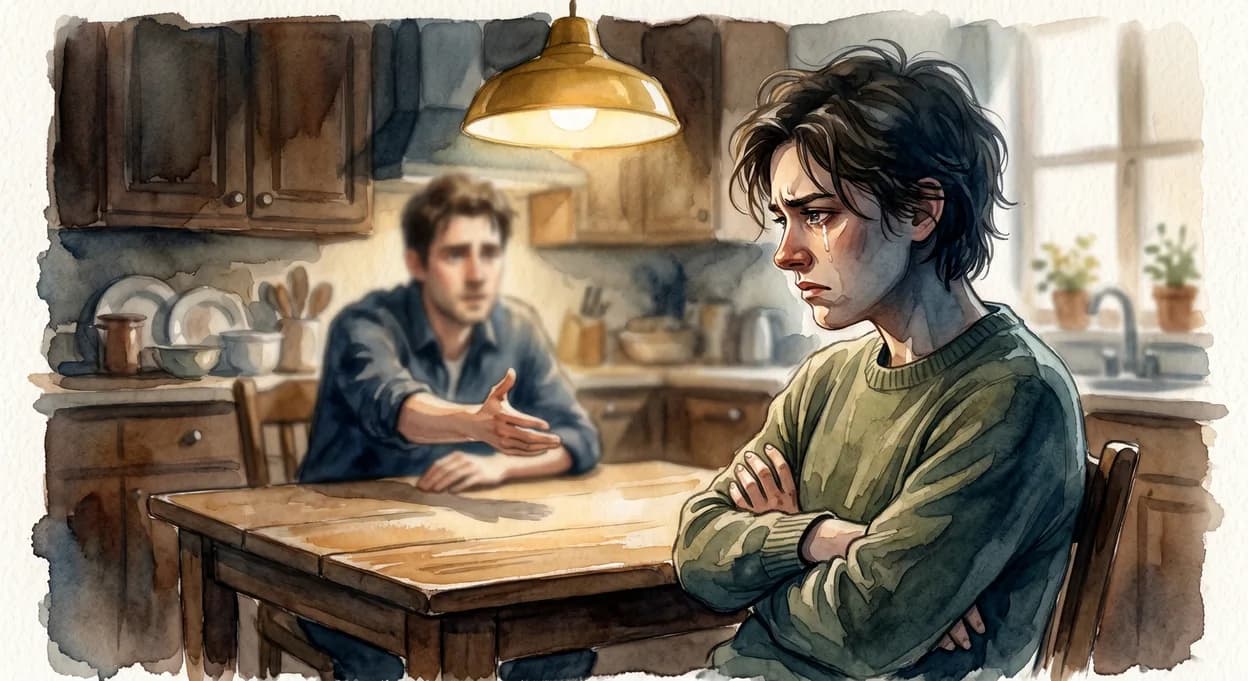
Shadow Work: How to Face the Emotion You Hide
Shadow work means turning toward the feelings and reactions you normally push away, naming them, and understanding what they protect. In plain emotional terms, your shadow is usually a vulnerable primary feeling (hurt, fear, shame) hidden under a louder secondary reaction (anger, numbness, withdrawal). Naming that hidden feeling precisely is what loosens its grip: when people put a feeling into words, amygdala activity drops while the prefrontal cortex steps in to dampen it (Lieberman et al., 2007, UCLA). So the work is not mystical. It is noticing the reaction, finding the softer feeling underneath, and meeting it with care instead of judgment. You can start tonight, gently, and this guide walks you through how, plus when to involve a professional.
Affect labeling (putting a feeling into words) lowers amygdala activity and raises right ventrolateral prefrontal cortex activity (Lieberman et al., 2007, UCLA).
Greenberg's Emotion-Focused Therapy classifies emotions into 4 types; the therapeutic move is working through the secondary reaction to reach the vulnerable primary emotion (Greenberg, 2015).
Try Our Interactive Feelings Wheel
130 emotions. AI-powered insights. Completely free.
Identify your emotions now
Try FreeThe term shadow work comes from Carl Jung (1875-1961), who used "the shadow" for the parts of ourselves we disown or refuse to see. Modern shadow work, the journaling prompts and "meet your shadow" exercises trending online, is a popular reworking of that idea, not a clinical protocol Jung wrote. Stripped of the mysticism, shadow work maps onto well-studied affective science. Leslie Greenberg's Emotion-Focused Therapy distinguishes a primary emotion (your true first response) from a secondary emotion that reacts to and covers it (Greenberg, 2015). The shadow self, in everyday language, is that disowned primary feeling your surface reaction is guarding. This guide uses Jung as the doorway, then grounds shadow work in the feeling-under-the-feeling, so a regular person can actually do it.
On this page
What Is the Shadow, in Plain Emotional Terms?
Why Do You Overreact or Get Angry Over Small Things?
Can You Do Shadow Work Safely Without a Therapist?
How to Use
- 1
Catch the reaction in the moment
Shadow work actually begins with a reaction that feels too big for the trigger. You snapped at your partner over the dishes, went cold in a meeting, or felt a wave of numbness for no clear reason. Don't judge it. Just note it: "That was bigger than the situation." The oversized reaction is the door to the hidden feeling, and naming the moment as worth looking at is step one of every inner work practice.
- 2
Find the feeling under the reaction
Ask the core shadow work question: "If the anger (or numbness, or withdrawal) is the armor, what is it guarding?" Anger often covers hurt or helplessness; numbness often covers something that felt like too much. Check your body, not just your thoughts: a tight throat, a sinking chest, heat in your face. The point is to get past the loud secondary reaction to the softer primary feeling underneath, which carries the real information and the real need.
- 3
Name the hidden feeling precisely
Put the hidden feeling into specific words: not "bad," but "abandoned," "resentful," "ashamed," or "powerless." Precision matters. When people label a feeling in words, amygdala activity drops and the prefrontal cortex turns the intensity down (Lieberman et al., 2007). Most people stall at "angry" or "fine," too blunt to work with. The more exact the name, the more the feeling loosens its grip, so find the closest word for your shadow self in this moment.
- 4
Meet it with compassion, not judgment
Turn toward the named feeling the way you would toward a hurt friend, not an enemy to crush. Try the inner-child framing: picture the younger part of you that first learned this feeling wasn't allowed, and offer it kindness. Or use self-compassion: "This is hard, and it makes sense given what happened." This is the opposite of how most of us treat disowned parts. The goal of shadow work is to welcome the feeling back, not to delete it.
- 5
Look for the pattern over time
One session shows you one hidden feeling; the real shift comes from noticing what keeps recurring. Track it lightly: which feeling keeps hiding under your reactions, and when. You might find that anger keeps masking hurt on Sunday nights, or that numbness shows up after family calls. Seeing the recurring pattern is what turns shadow work from a one-off exercise into lasting self-awareness, and it tells you which tender feeling actually needs your attention.
A Worked Example: Anger That Was Really Hurt
Here is how the feeling-under-the-feeling shows up in real life.
Nothing mystical happened. Maya turned toward the reaction, found the softer feeling underneath, named it precisely, and met it with compassion. That is shadow work in one ordinary moment.
What to Remember
- Your shadow, in plain terms, is a vulnerable primary feeling (hurt, fear, shame) hidden under a louder reaction (anger, numbness, withdrawal).
- An overreaction is information: it points to the hidden feeling the reaction is protecting.
- Naming the hidden feeling precisely loosens its grip (affect labeling; Lieberman et al., 2007).
- Meet the feeling with compassion, not judgment. The goal is to understand and integrate it, not delete it.
- Go gently. Pacing and self-compassion are the safety rails, and crisis or deep trauma belong with a professional.
Myths About Shadow Work
Shadow work is mystical and only works if you believe in Jungian archetypes.
At its core, shadow work is facing emotions you avoid, a plain, well-studied process. The science is secondary-to-primary emotion (Greenberg, 2015) and affect labeling, not esoteric ritual.
The shadow is the evil part of you that you need to get rid of.
The shadow self is made of disowned, protective parts. The goal is to understand and integrate them, not delete them. The anger isn't the enemy; it is guarding something tender.
You do shadow work alone with a blank page and a list of prompts.
Most people stall there. The hard part is identifying the hidden feeling, not writing about one you can already name. Detection and a guide are what move it forward.
If shadow work stirs up a lot, you are doing it wrong or it is harmful.
Surfacing avoided feelings can intensify them before relief, consistent with how processing works (Pennebaker, 1997). Pacing and self-compassion matter, and crisis or deep trauma belong with a professional.
Just naming a feeling is too simple to make a difference.
Affect labeling measurably lowers amygdala reactivity (Lieberman et al., 2007, UCLA). Naming the hidden feeling precisely is the work, not a warm-up to it.
When to Reach Out for Professional Support
Gentle shadow work is safe to try alone. Some signals mean it is time to involve a professional.
- Shadow work regularly brings on dissociation: feeling foggy, unreal, or disconnected from yourself.
- You wake with intrusive images or nightmares after the work, or previously managed trauma symptoms return.
- Your mood worsens for more than a few days, or you struggle to function at your baseline.
- You feel flooded and cannot calm down, or the material involves significant past trauma.
If you have thoughts of harming yourself, contact a crisis line or emergency services now. EmoFlow-AI is a reflection tool, not therapy or an emergency service.
Research Evidence
Sources: Lieberman et al., Psychological Science (2007), DOI 10.1111/j.1467-9280.2007.01916.x, Greenberg, Emotion-Focused Therapy, American Psychological Association (2015), Pennebaker, Psychological Science (1997); Frijda, The Emotions, Cambridge University Press (1986)
Sources
- Putting Feelings Into Words: Affect Labeling Disrupts Amygdala Activity in Response to Affective Stimuli - Lieberman et al., Psychological Science (2007)
- Putting Feelings Into Words: Affect Labeling as Implicit Emotion Regulation - Torre & Lieberman, Emotion Review (2018)
- Writing About Emotional Experiences as a Therapeutic Process - Pennebaker, Psychological Science (1997)
- Emotion-Focused Therapy (Theories of Psychotherapy Series) - Greenberg, American Psychological Association
- What Is Shadow Work? Benefits and How To Start - Cleveland Clinic
Try Shadow Work in EmoFlow-AI
Here's the honest problem with shadow work: alone, the hard part isn't writing, it's figuring out which feeling you're actually hiding. A blank prompt list asks you to guess your shadow self on an empty page, and most people stall right there. EmoFlow-AI is built for exactly that gap. You start with a quick check-in on the interactive wheel of 130 emotions, high-resolution affect labeling that lets you name the precise feeling, not just "angry" or "bad." Then the mismatch engine does the part you can't do alone: when your reaction doesn't match the emotion underneath, it surfaces the likely hidden primary feeling for you, grounded in secondary-emotion and action-tendency research. From there an in-the-moment coach guides a matched practice step by step, inner-child work, self-compassion, RAIN, instead of leaving you with a list. And the weekly and monthly analysis reads your check-ins back and shows what keeps recurring, so your inner work becomes lasting emotional self awareness and self awareness exercises that compound, not a dead journal. Real shadow work for beginners, detected, guided, and tracked, not guessed.
- Mismatch engine: surfaces the hidden emotion your reaction is masking, the part you can't spot alone
- 130-emotion wheel: name the precise shadow feeling (affect labeling), not just "angry" or "bad"
- In-the-moment coach: guides inner-child work, self-compassion, and RAIN step by step
- Weekly and monthly analysis: shows which feeling keeps recurring, so it never becomes a dead journal
For Mental Health Professionals
Clients drawn to shadow work often arrive with the language of trends but no way to locate the feeling under the reaction. EmoFlow-AI gives them a structured, between-session way to practice: the 130-emotion wheel supports precise affect labeling, and the mismatch engine flags when a secondary reaction is covering a more vulnerable primary emotion, useful raw material for Emotion-Focused or schema-informed work. Clients can bring a dashboard or PDF of recurring patterns to session, so you see which feelings keep surfacing and when, rather than relying on memory. The client controls exactly what they share, and pacing prompts plus crisis routing keep self-guided practice within safe limits. It is a reflection bridge between sessions, not a replacement for your clinical judgment.
- Between-session affect labeling and mismatch detection that surface secondary-over-primary patterns
- Recurring-pattern dashboard or PDF the client can choose to share in session
- Built-in pacing and crisis routing for safer self-guided reflection
Frequently Asked Questions
Shadow work is the practice of turning toward feelings and reactions you usually push away, naming them, and understanding what they protect. For beginners, start small: when a reaction feels too big for the situation, pause and ask what softer feeling it might be guarding (anger often covers hurt or fear). Name that hidden feeling in precise words, then meet it with kindness instead of judgment. You do not need special rituals or belief in archetypes, just honest attention to your own reactions and the feeling underneath them.
Gentle shadow work is generally safe to do alone, but pacing and self-compassion are the safety rails. Surfacing avoided feelings can intensify them before relief, so feeling stirred up is not proof you are doing it wrong. Stop and reach out to a professional if shadow work brings on dissociation, nightmares, mood that worsens for more than a few days, or the return of trauma symptoms. Self-awareness exercises like naming a feeling and meeting it with kindness are fine to try tonight; deep trauma is not a solo project.
You overreact over small things when a louder surface emotion is masking a more vulnerable one, and the small thing brushed against it. Anger is the classic example: it gives you energy and a sense of control, while the hurt, fear, or helplessness underneath feels exposed. A useful clue is a mismatch between your urge and your feeling, feeling sad but wanting to fight signals a secondary reaction sitting on a softer primary one. So the overreaction is information: it points straight at the hidden feeling your shadow work is trying to reach.
The feelings most people repress are the vulnerable ones: hurt, fear, shame, grief, or helplessness, the feelings that felt unsafe to show. You find them by working backward from your reactions. Watch for moments when anger, defensiveness, numbness, or withdrawal suddenly take over; those outbursts usually mean something hidden got stirred. Then ask what the reaction is guarding. You can also look at traits you judge harshly in others, since they often mirror a disowned part of your own shadow self. The reaction is the trailhead to the repressed feeling.
Feeling worse before better can be a normal part of facing avoided emotions, since turning toward a feeling you have suppressed can intensify it before it eases (Pennebaker, 1997). That said, intensity is not a goal, and more is not better. Slow down, space the work out, and pair it with self-compassion. If the difficulty tips into dissociation, nightmares, mood that stays low for more than a few days, or returning trauma symptoms, that is the signal to pause solo work and reach out to a mental health professional.
Shadow work is a slow practice, not a quick fix, and short, regular sessions beat long, draining ones. Many people work in roughly fifteen-minute moments rather than marathon digs, because the goal is steady awareness, not intensity. There is no finish line; you are building the ongoing habit of noticing your reactions and the feelings underneath them. What actually creates change is repetition over time, seeing which feeling keeps recurring under your reactions, so do a little, gently, and let the pattern reveal itself across weeks rather than forcing it in one sitting.
A shadow work journal and prompts can help, but for many people they are not enough on their own, which is why so many abandoned prompt lists sit half-finished. The trouble is that prompts ask you to name a hidden feeling you cannot yet see, so the page stays blank. What moves shadow work forward is help identifying the feeling under the reaction, then a guided way to work with it. EmoFlow-AI's mismatch engine surfaces the likely hidden emotion from your own check-in and its coach guides the next step, instead of leaving you alone with a prompt.
Related Techniques
Related Articles
EmoFlow-AI provides evidence-based education - not medical advice, diagnosis, or treatment - and is not a substitute for a qualified mental-health professional. If you are in crisis or may harm yourself, contact local emergency services or a crisis line now.
Ready to try the interactive feelings wheel?
Start a Check-in